Overview
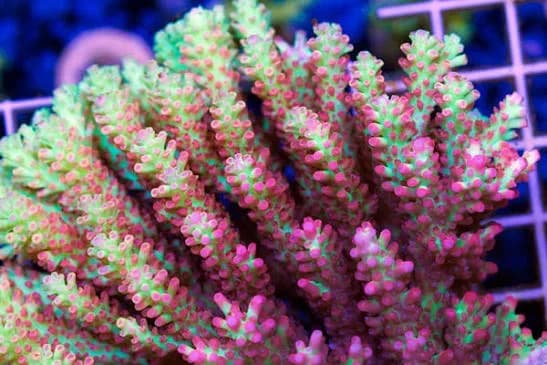
Acropora is the flagship genus of the reef hobby — the branching, tabling and staghorn corals that define a classic 'SPS tank'. It is the largest and most diverse coral genus, and its members offer some of the most intense colours available, from electric blues and purples to reds, greens and multi-tone tips. A well-grown Acropora colony is the centrepiece many reefers aspire to.
It is also the most demanding coral we stock, and honesty matters here: Acropora rewards stability above all else and punishes neglect quickly. It wants strong light, strong flow, low nutrients within reason, and — most importantly — rock-steady alkalinity, calcium and magnesium. Sudden swings that other corals shrug off can trigger rapid tissue loss. This is not a coral for a new or fluctuating system; it belongs in a mature, well-managed tank.
As one-of-one WYSIWYG livestock, the exact colony or frag you see is the one you take home, with its own unique colour and growth form. Be aware that Acropora colours shift significantly with lighting spectrum and intensity, so a piece will often look different at home and may take weeks to colour up as it adjusts.
Placement & neighbours
Place Acropora high in the tank where it gets the strongest light and flow, on secure rockwork — it grows into large, brittle branching colonies, so mount it firmly where it has room to extend upward and outward. It is essentially peaceful toward neighbours and relies on growth rather than stinging to compete, though some species put out short sweeper tentacles at night, so leave a little space between colonies.
The bigger compatibility risk is the other way around: Acropora is easily stung and overgrown. Keep it well clear of aggressive LPS such as Euphyllia, torch and Elegance corals, whose long sweepers will burn it, and away from mat-forming softies and encrusting corals that can grow onto its base. It sits best in a dedicated SPS zone alongside other Acropora and Montipora.
Health & acclimation
Acropora needs a stable, mature tank and careful pest screening — this is the coral most affected by dedicated predators. Always coral-dip and, ideally, quarantine new pieces to screen for Acropora-eating flatworms (AEFW) and red bugs, both of which are hard to spot and can spread through a collection; inspect the base and check dip water for pests and eggs. Acclimate light gradually to avoid bleaching, and match temperature and salinity carefully. The classic warning sign is tissue recession or 'STN/RTN' (slow or rapid tissue necrosis), where tissue peels from the base or tips and exposes white skeleton — this is usually driven by unstable alkalinity or another parameter swing and needs immediate attention. Healthy polyp extension is the best day-to-day sign that an Acropora is settled.
Frequently asked questions
Is Acropora suitable for beginners?
What's the most important thing for keeping Acropora alive?
What pests should I watch for?
Why did my Acropora turn brown after I added it?
How much light and flow does it need?
What does it mean when the tips turn white?
Care guidance is drawn from our own experience — every coral is an individual, so treat it as a starting point, not a guarantee. Not sure if a coral suits your system? Come ask us in store.