Overview
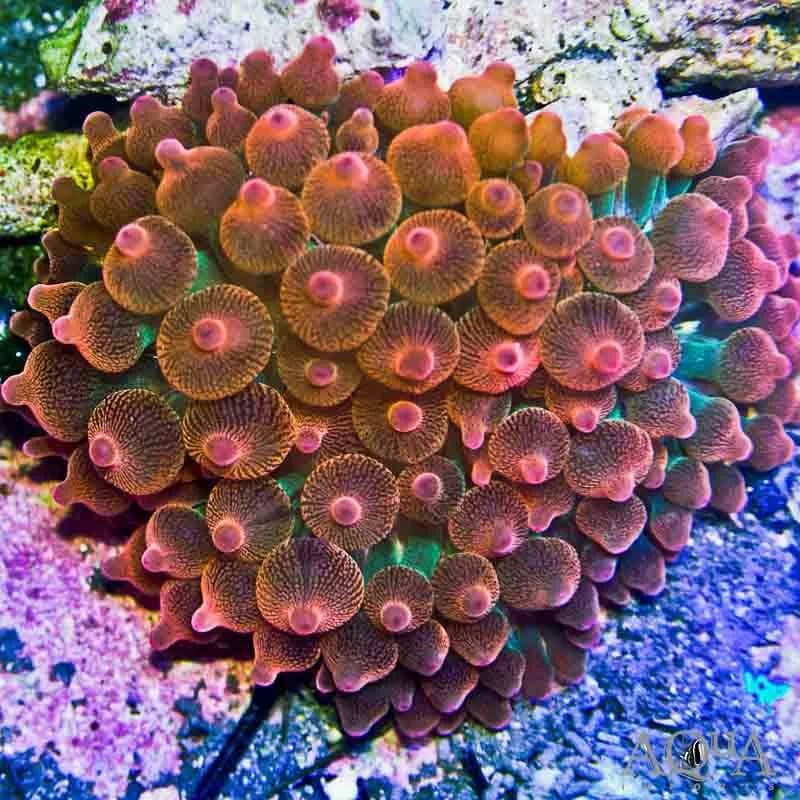
The Bubble Tip Anemone (BTA) is the most popular and reliable host anemone for clownfish, and the one we most often recommend to anyone wanting that classic clownfish-and-anemone relationship. Its tentacles characteristically swell into bulbs at the tips, though this is variable — the same anemone may show bulbs one week and long, stringy tentacles the next depending on light, flow, feeding and whether a clownfish is hosting in it. Colours range from common brown and green up to the highly prized 'Rose' and rainbow forms.
It's the hardiest of the host anemones, but it's important to be honest that any anemone is a step up from most corals. A BTA needs a mature, stable tank — ideally six to twelve months established — with reliable lighting and pristine water. It's an animal, not a coral: it moves under its own power, it needs feeding, and a dying one can foul a tank quickly. We class it as intermediate rather than beginner for those reasons.
As one-of-one WYSIWYG livestock, the exact anemone you see is the one you take home, though bear in mind its colour and tentacle shape can look quite different once it settles under your own lighting and conditions.
Placement & neighbours
Treat a BTA as an aggressive tankmate. It's mobile and will move to find a spot it likes, and wherever it settles it stings — any coral it touches or reaches with its tentacles can be badly burned or killed. For that reason many keepers give anemones their own tank, or place them where surrounding rock creates a natural buffer and accept that the anemone, not the aquascaper, chooses the final spot. Don't build delicate coral right up against where it sits.
The other major risk is mechanical: a wandering anemone can crawl into a powerhead or overflow and be shredded, which then pollutes the tank. Cover or guard pump intakes before adding one. On the positive side, it pairs beautifully with clownfish, which will often host in it, and it's generally left alone by most fish and inverts — the compatibility concern is almost entirely about what the anemone can reach and where it can wander.
Health & acclimation
Buy carefully — a healthy BTA has a firmly attached foot, an intact (not gaping) mouth, good colour, and a reactive, sticky feel to the tentacles. Avoid any with a torn foot, a wide-open or 'blown out' mouth, or that has been detached and drifting, as these often decline. Acclimate slowly, ideally by drip, since anemones are sensitive to salinity and parameter shifts, and don't add one to an immature or unstable tank. The key warning signs are a gaping mouth that won't close, expelling of brown stringy material, going limp, or detaching and wandering constantly — any of these mean act fast, as a dying anemone releases a lot of waste and can crash water quality. Remove a clearly dead or disintegrating anemone immediately.
Frequently asked questions
Is a Bubble Tip Anemone suitable for beginners?
Why does my anemone keep moving around?
Will it host my clownfish?
Do I need to feed it, and how often?
Why are the tentacles stringy instead of bubbled?
What's the biggest risk to the rest of my tank?
Care guidance is drawn from our own experience — every coral is an individual, so treat it as a starting point, not a guarantee. Not sure if a coral suits your system? Come ask us in store.