
Overview
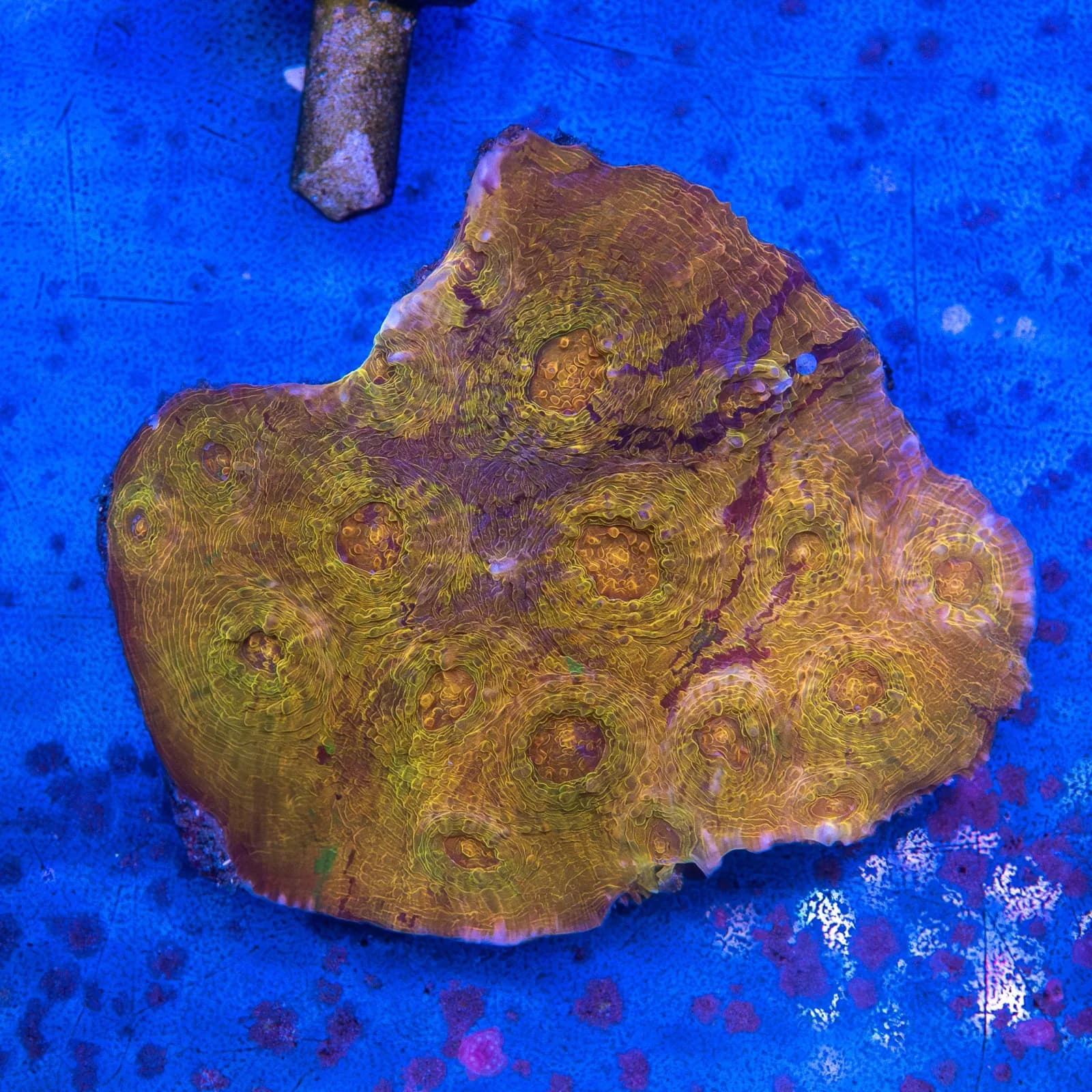
Chalice Coral is a broad common name covering several plating and encrusting LPS genera including Echinophyllia, prized for extraordinary and highly variable colour patterns that make almost every colony a genuine one-of-one collector's piece. Patterns can include swirls, dots, and mosaic-like combinations across reds, greens, blues and oranges.
It grows as a plate or encrusting form that follows the contour of the rock it's attached to, gradually expanding outward. Because so much of its appeal is in the individual colour pattern, chalice corals are typically sold and chosen on a WYSIWYG basis.
Despite the delicate appearance, chalice corals carry a surprisingly potent sting and can be one of the more territorial corals in a mixed reef if not given adequate space.
Placement & neighbours
Chalice Coral is one of the more aggressive LPS corals kept in home aquariums, using long sweeper tentacles at night to sting anything encroaching on its space, including corals it is not in direct contact with. Give at least 15-20 cm clearance from any neighbour and avoid placing faster-growing corals where they might eventually grow into contact.
Best mounted on a small plug or isolated rock "island" in the mid tank so its growth and stinging range can be controlled and monitored.
Health & acclimation
Drip acclimate slowly and handle gently, as thin plating tissue can be damaged by rough handling during transport. A dip on introduction is recommended to check for and remove flatworms or nudibranchs, which can target chalice tissue. Watch closely for signs of rapid tissue necrosis (RTN) or slow tissue necrosis (STN) after introduction, both of which can appear following shipping stress or a poor initial placement and require prompt attention (fragging away healthy tissue from the affected area) if they progress.
Frequently asked questions
Why are chalice corals considered aggressive despite looking delicate?
What lighting does Chalice Coral need?
What does RTN/STN look like and what should I do?
Can Chalice Coral be fragged easily?
How much space does a Chalice Coral need from neighbours?
Care guidance is drawn from our own experience — every coral is an individual, so treat it as a starting point, not a guarantee. Not sure if a coral suits your system? Come ask us in store.