Overview
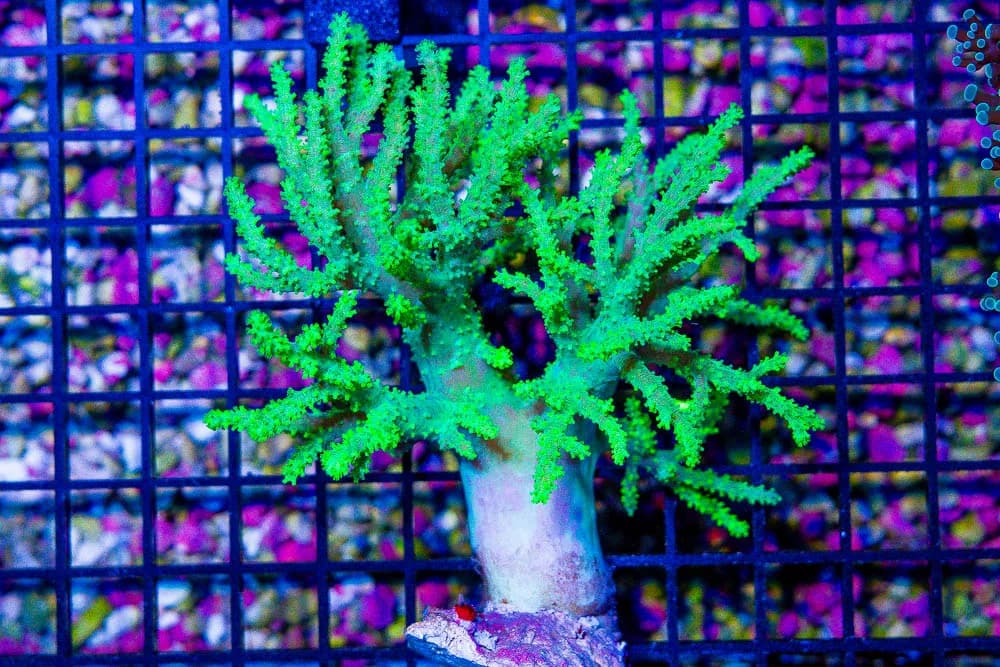
Sinularia is a group of leather corals closely related to the Toadstool (Sarcophyton) and every bit as hardy. Depending on species it takes finger-like, lobed, or frilly cabbage-like forms, all built from a tough, leathery tissue that gives the group its common name. It's undemanding on light, flow and water chemistry, grows into a substantial colony, and is one of the more reliable choices for a beginner or a low-maintenance mixed reef. Colours are generally muted creams, tans, yellows and greens, with the appeal in the form and movement rather than vivid colour.
A well-grown Sinularia becomes an impressive, sturdy centrepiece that sways gently in the current. It's tolerant of the kind of beginner conditions that would stress stony corals, which is a big part of why leather corals in general are so widely recommended as starter corals.
As one-of-one WYSIWYG livestock, the exact coral you see is the one you take home, with its own form and colour. Expect some change in appearance as it settles into your lighting and system over the following weeks.
Placement & neighbours
Physically Sinularia is peaceful and has no stinging sweeper tentacles, but it's worth treating as semi-aggressive because leather corals are among the stronger chemical competitors — Sinularia in particular releases potent terpenoid compounds that can irritate and suppress nearby corals, especially SPS. Run good carbon and skimming, keep up water changes, and give it space rather than crowding sensitive stony corals against it.
Place it on rockwork in the lower-to-middle tank with moderate flow, leaving room for the colony to expand and sway without brushing neighbours. It's largely ignored by fish and inverts and coexists comfortably with other soft corals. In a mixed reef, dilution is the key — adequate water volume, flow, carbon and regular water changes keep its chemical output from becoming a problem for more sensitive corals.
Health & acclimation
Sinularia is very hardy and ships well. Acclimate normally by matching temperature and salinity; it isn't fussy about light levels while settling. A gentle soft-coral dip is fine, and it has relatively few dedicated pests. Like other leathers it periodically deflates, closes its polyps and sheds a waxy surface film to clear off detritus and algae, often looking limp or shrunken for a day or two before reopening brighter than before — this sloughing is completely normal and not a sign of illness. Genuine trouble looks different: a colony that stays closed for a week or more, or shows a rotting, disintegrating base, which usually points to poor water quality or physical damage at the point of attachment.
Frequently asked questions
Is Sinularia good for beginners?
Why is my Sinularia closed up and looking limp or waxy?
Will it harm my other corals?
Do I need to feed it?
How much light and flow does it need?
Can I frag or propagate it?
Care guidance is drawn from our own experience — every coral is an individual, so treat it as a starting point, not a guarantee. Not sure if a coral suits your system? Come ask us in store.