
Overview
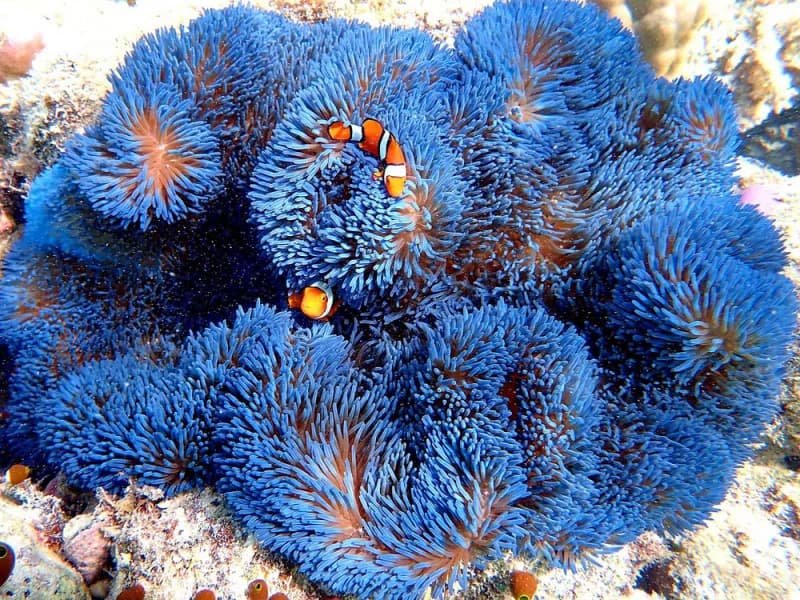
The Gigantea, or giant carpet anemone, is one of the most beautiful host anemones — a broad, flat disc covered in short, dense, finger-like tentacles that give it a plush, carpet texture, often in stunning greens, blues, purples and pinks. It's a natural host for several clownfish species and, when thriving, is a spectacular centrepiece.
It's essential to be honest here: Stichodactyla gigantea is one of the most difficult anemones in the hobby, with a poor survival record. Many specimens arrive already stressed or damaged from collection and shipping and decline over weeks to months no matter what the keeper does. It demands very intense lighting, pristine and stable water, a mature tank, regular feeding, and careful selection of a healthy specimen to begin with. We class it as advanced and genuinely don't recommend it for anyone who hasn't already kept easier anemones successfully. If you want a first host anemone, a Bubble Tip is a far safer choice.
As one-of-one WYSIWYG livestock, the exact anemone you see is the one you take home. Because this species is so demanding and so often lost, we'd rather talk you through it honestly than see it fail.
Placement & neighbours
Treat the Gigantea as aggressive. It has an exceptionally sticky, potent sting used to capture prey, and it will catch and eat fish and shrimp that contact it — including, sometimes, the very clownfish trying to host, or tankmates that blunder onto it. It also stings any coral it can reach. For these reasons it's best given its own tank, or a large system where nothing valuable can come into contact with it.
Like all anemones it's mobile and chooses its own position, and a large carpet can occupy a big footprint. It typically anchors its foot onto solid rock or substrate, often beneath the sand, so provide a sandy area over rock. Guard all pump intakes and overflows before adding one, because a wandering or dislodged carpet can be shredded and foul the tank rapidly. Don't build delicate corals anywhere near where it settles.
Health & acclimation
Selection is everything with this species. A healthy Gigantea has a firmly attached foot, very sticky tentacles (a light touch should cling to your finger — a non-sticky carpet anemone is a serious warning sign), an intact and closed mouth, and good colour. Reject any that feel non-adhesive, have a gaping or blown-out mouth, are detached and drifting, or look faded or 'melting', as these rarely recover. Acclimate very slowly by drip, and only ever add one to a mature, stable, well-established tank. The critical warning signs are loss of stickiness, a persistently gaping mouth, expelling of brown material, deflation, or wandering constantly — any of these mean the animal is failing, and a dying carpet anemone releases a large amount of waste that can crash a tank quickly. Remove a clearly dying specimen without delay.
Frequently asked questions
Is the Gigantea suitable for beginners?
How can I tell if a carpet anemone is healthy before buying?
Will it hurt my fish or clownfish?
How much light does it need?
Where will it attach, and how do I protect my tank?
Why do so many Giganteas die despite good care?
Care guidance is drawn from our own experience — every coral is an individual, so treat it as a starting point, not a guarantee. Not sure if a coral suits your system? Come ask us in store.