Overview
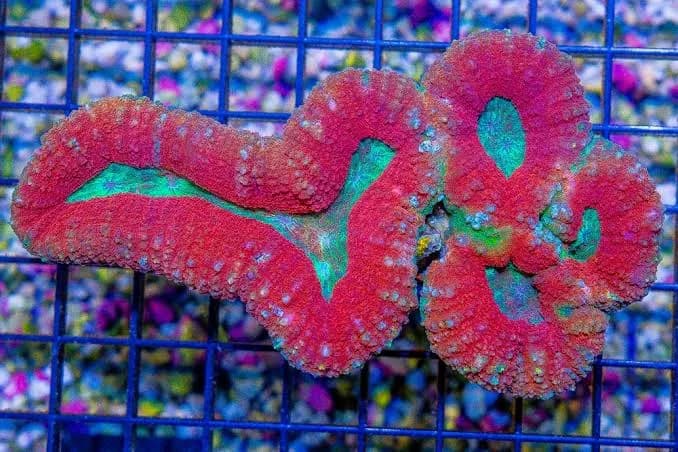
Lobophyllia is a large fleshy 'brain' or 'meat' coral and one of the most rewarding LPS for reefers of all levels. Colonies are made up of fleshy polyps arranged over a domed skeleton, sometimes as separate rounded heads and sometimes in a hill-and-valley pattern, and the whole surface inflates during the day into a plush, colourful cushion. Australian-collected specimens in particular are famous for intense 'rainbow' colouration that makes them standout centrepiece corals.
Note that the taxonomy here has shifted — many corals long sold as Symphyllia are now placed within Lobophyllia, so you'll see both names used for similar-looking animals. For care purposes they're treated the same. What matters in the tank is that these are hardy, forgiving corals that ask for modest light, gentle flow, and a low, stable position.
As one-of-one WYSIWYG livestock, the exact colony you see is the one you take home, with its own unique colour pattern and shape. Expect colour and inflation to settle over the following weeks as the coral adjusts to your lighting and system.
Placement & neighbours
Place Lobophyllia low in the tank — on the sand bed or a flat, low rock — with clear space around it. Although it appears passive, it can extend feeding and sweeper tentacles at night that will sting nearby corals, so it's best treated as semi-aggressive when planning neighbours. Leave a margin around the fully inflated colony, since it puffs up well beyond its skeleton and shouldn't be able to touch anything when expanded.
It won't tolerate being shaded or overgrown by faster corals, so keep encrusting SPS, mushrooms and mat-forming softies back from it. It coexists well with other calm, low-light LPS such as Acanthophyllia, Scolymia/Homophyllia and Cynarina, each given its own space. Avoid placing it directly beneath aggressive Euphyllia or torch corals whose long sweepers can reach down onto its fleshy tissue.
Health & acclimation
Lobophyllia is generally hardy, but the fleshy tissue is delicate and tears easily, so handle it by the skeleton and never squeeze or touch the flesh. Acclimate gently — match temperature and salinity over 20–30 minutes and keep it under low light for the first day or two, then settle it low in the tank. A gentle coral dip helps clear pests; inspect the underside and skeleton edges for LPS-eating flatworms and small predatory snails. The main things to watch for are brown jelly infection, which can spread quickly through damaged tissue, and tissue recession exposing skeleton at the margins, which usually points to too much flow, too much light, or unstable parameters rather than disease.
Frequently asked questions
What's the difference between Lobophyllia and Symphyllia?
Is Lobophyllia good for beginners?
Do I need to feed it?
Why is my Lobophyllia not inflating or showing exposed skeleton?
How much light does it need?
Does it sting other corals?
Care guidance is drawn from our own experience — every coral is an individual, so treat it as a starting point, not a guarantee. Not sure if a coral suits your system? Come ask us in store.