
Overview
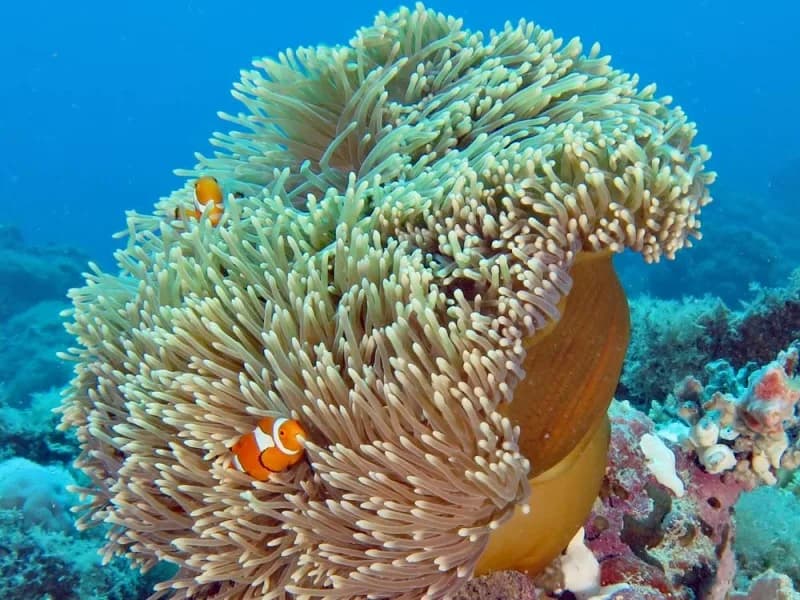
The Magnifica, or Ritteri anemone, is one of the most beautiful host anemones — long, flowing tentacles above a brilliantly coloured column that can be electric blue, green, red or magenta. In the wild it lives on exposed reef tops in intense light and strong current, often perched prominently on a coral head or pillar with its column fully on display. It's a spectacular natural host for several clownfish species.
Honesty matters here: Heteractis magnifica is a demanding, advanced-only anemone with a poor track record in captivity. It needs very intense lighting, strong flow, pristine and stable water, and a large, well-established tank, and even experienced keepers lose them. It's notorious for wandering — often relentlessly — until it finds conditions it likes, and a Magnifica on the move is at constant risk of reaching a powerhead. We class it firmly as advanced and don't recommend it for anyone who hasn't kept easier anemones successfully. Anyone wanting a first host anemone should choose a Bubble Tip instead.
As one-of-one WYSIWYG livestock, the exact anemone you see is the one you take home. Because this species is so demanding and so often lost, we'd rather set honest expectations than see it fail.
Placement & neighbours
Treat the Magnifica as aggressive. It has long tentacles with a potent sting used to capture prey, and it will sting any coral it can reach and can capture fish that contact it. Given its large size, its tendency to wander, and the reach of its tentacles, it's best given its own tank or a large system where nothing valuable can come into contact with it, and where corals aren't sited anywhere near where it settles.
Like all anemones it chooses its own position and is highly mobile — more so than most. In the wild it attaches its foot high on exposed rock or a pillar with strong light and flow, so provide solid elevated rockwork and expect it to hunt for the brightest, highest-flow spot. Guard every pump intake and overflow before adding one, because a wandering Magnifica reaching a powerhead is one of the most common ways it's lost, and a shredded anemone will foul the tank fast.
Health & acclimation
Selection and conditions are everything with this species. Choose a specimen with a firmly attached foot, sticky tentacles, an intact and closed mouth, good colour, and no damage to the column — reject any that are detached, deflated, gaping, or that have torn feet, as these rarely recover. Acclimate very slowly by drip, and only ever add one to a large, mature, pristine, stable tank. The critical warning signs are a persistently gaping mouth, deflation, expelling of brown material, loss of tentacle stickiness, a damaged column, or constant wandering — any of these mean the animal is failing, and a dying Magnifica releases a large amount of waste that can crash a tank rapidly. Remove a clearly dying specimen without delay, and note that column damage in particular often proves fatal.
Frequently asked questions
Is the Magnifica suitable for beginners?
Why does the Magnifica wander so much?
How much light does it need?
How do I protect my tank and my other livestock?
Will it host my clownfish?
Why do Magnificas so often die despite good care?
Care guidance is drawn from our own experience — every coral is an individual, so treat it as a starting point, not a guarantee. Not sure if a coral suits your system? Come ask us in store.