Overview
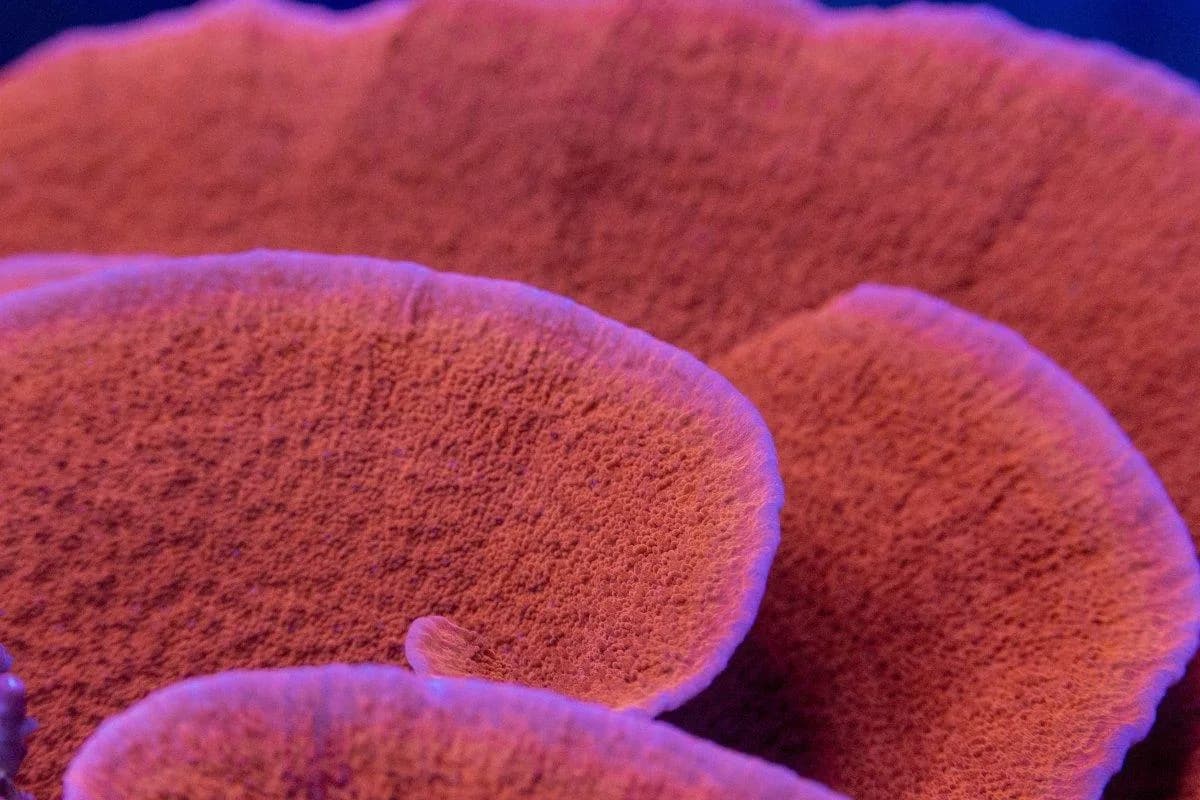
Montipora is one of the most forgiving small-polyp stony (SPS) corals and is a common recommendation for reefers making the step up from soft corals and LPS. The genus is diverse, taking encrusting, plating (like a shelf or vase), and branching forms depending on species, so a single tank can hold several very different-looking Montipora that all share the same easy care requirements. Popular examples include encrusting 'Rainbow' and 'Superman' varieties, branching digitata, and plating 'Setosa'.
Compared to Acropora, Montipora is noticeably more tolerant of imperfect water quality and light, which makes it a sensible first SPS. It still needs stable parameters to colour up and grow well, but it will forgive the occasional swing that would bleach a more demanding coral. Good growth is a realistic goal even on modest lighting, and healthy colonies can add visible tissue within weeks.
As WYSIWYG livestock, the exact colony you see is the one you take home — colour, size and form are specific to that piece. Note that colour under our shop lighting may shift as the coral acclimates to your own lights and spectrum over the following weeks.
Placement & neighbours
Montipora is a peaceful coral with no sweeper tentacles and no chemical aggression to speak of, so it will not sting neighbouring corals. The real compatibility concern runs the other way: because it grows quickly and encrusts over rock, it can overtake nearby corals or grow onto neighbours and irritate them. Give it room to expand and check periodically that a plating colony isn't shading corals beneath it.
Place it in the lower-to-middle third of the tank while it settles, then move it higher once you know how it responds to your light. Branching and encrusting types do well on rockwork; plating types eventually want open space to spread. Keep it clear of aggressive LPS (Euphyllia, Acanthophyllia) and stinging corals whose sweeper tentacles can reach it, as Montipora tissue is thin and easily damaged.
Health & acclimation
Acclimate slowly by drip or by matching temperature and salinity over 20–30 minutes; avoid bright light for the first day. Always coral-dip new Montipora before adding it to your display — an iodine- or oil-based coral dip clears many hitchhikers. The main pest is the Montipora-eating nudibranch, a small white or translucent slug that matches the coral's colour and lays lace-like egg spirals; inspect the coral and its base carefully, dip, and ideally quarantine, because these nudibranchs can wipe out a collection. Also watch for red flatworms and, on plating colonies, tissue recession starting at the edges, which usually signals unstable alkalinity or a light or flow problem rather than disease.
Frequently asked questions
Is Montipora a good first SPS coral?
What is a Montipora-eating nudibranch and how do I avoid it?
How much light and flow does it need?
Will my Montipora keep the same colour it has in the shop?
Does it sting or harm other corals?
Why is my Montipora losing tissue from the edges?
Care guidance is drawn from our own experience — every coral is an individual, so treat it as a starting point, not a guarantee. Not sure if a coral suits your system? Come ask us in store.