Gold Spot Goby With Pistol Shrimp — available now1 in stock
Browse all fish →Overview
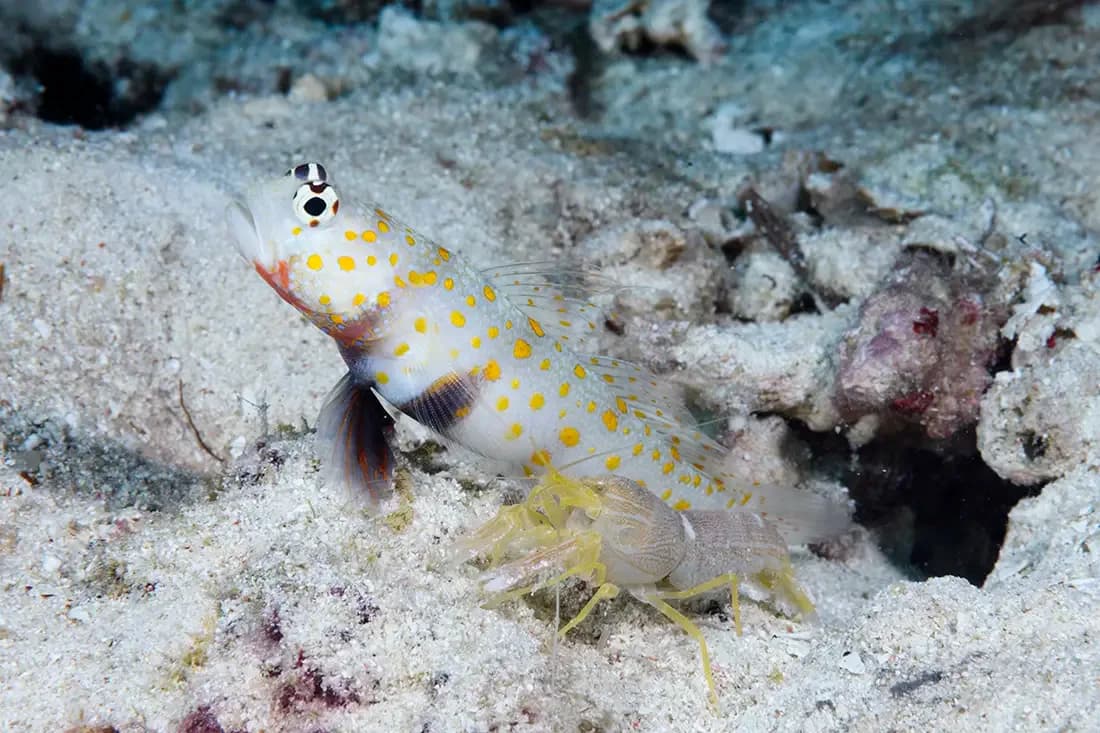
Amblyeleotris guttata, commonly known as the Gold Spot, Spotted or Orange-spotted Prawn Goby, is a slender shrimp goby with a pale body covered in small orange to golden spots and some darker blotches. It lives on sand and rubble slopes of the Western Pacific, including the Great Barrier Reef, and is usually seen perched at the mouth of a burrow it shares with an alpheid pistol shrimp.
This entry covers the goby supplied together with a pistol shrimp. In this partnership the shrimp digs and maintains the burrow, while the goby acts as a lookout for its nearly blind partner. The shrimp keeps an antenna in contact with the goby, and a flick of the goby's tail sends both into the burrow when danger approaches. Supplying the two together gives them the best chance of setting up a shared burrow in the aquarium, although the pair cannot be guaranteed to stay together in every tank.
The goby is peaceful, reef safe and relatively hardy once settled. It is rated intermediate rather than beginner because it needs a proper sand bed, a covered tank and targeted meaty feedings, and new arrivals can be shy and slow to eat. The pistol shrimp also needs careful acclimation, like most invertebrates.
Compatibility
The Gold Spot Goby suits a peaceful to moderately active reef community: clownfish, firefish, cardinalfish, small wrasses, blennies, anthias and similar fish. Avoid predators and bullies such as lionfish, groupers, eels, large triggerfish, large hawkfish and larger dottybacks. These will harass or eat the goby, and many will also prey on the pistol shrimp. Large predatory wrasses and some crabs are also a risk to the shrimp.
The goby is territorial toward its own kind and toward other shrimp gobies that want the same sand, so in most home aquariums keep only one goby and shrimp pair. The pistol shrimp is generally harmless to fish and corals. It may occasionally snap at very small shrimp or crabs that intrude on the burrow. The main drawback of the pair is digging: sand is constantly moved, so frags on the sand bed can be buried and loose rockwork can be undermined.
Health & quarantine
Once settled, this goby is a fairly robust fish. The main risks come from stress and starvation in the first few weeks, plus common marine parasites such as marine ich (Cryptocaryon) and velvet (Amyloodinium). Quarantine the goby for at least 4 weeks with a sand tray or pipe section for shelter, and confirm it is eating before moving it to the display. The pistol shrimp must not be exposed to copper or other invertebrate-toxic treatments. If the goby needs treatment, house the shrimp separately in the meantime, which may mean the pair has to re-establish afterwards. Acclimate both animals slowly by drip, as the shrimp is sensitive to rapid changes in salinity. Keep lights dim for the first day, and release them near sand and a cave so they can dig in straight away. A secure lid or mesh cover is essential, because jumping is a common cause of loss in shrimp gobies.
Frequently asked questions
Are the goby and shrimp guaranteed to stay paired?
How deep does the sand bed need to be?
What is that clicking noise in my tank?
Will the pair bury my corals or move my rocks?
Can I medicate the goby if it gets sick?
Does the tank really need a lid?
Care guidance is drawn from our own experience — every fish is an individual, so treat it as a starting point, not a guarantee. Not sure if a species suits your tank? Come ask us in store. New to the terms? Read the care-terms glossary.